
Cambelt or Timing Chain: Which Does Your Car Have, and Why It Matters
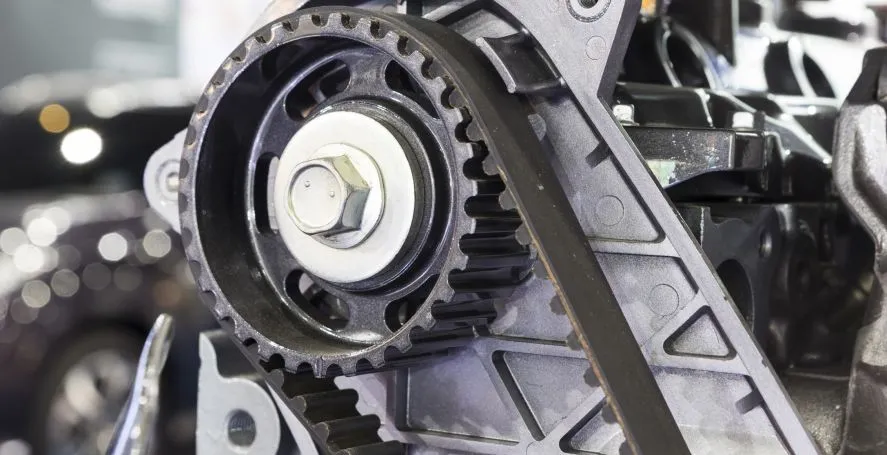
We have written before about when a timing belt needs replacing and what it costs. But a surprising number of drivers do not know whether their car has a timing belt at all. Some engines use a chain instead, and the two need looking after very differently. Here is how to tell them apart and what each one means for you.
What the timing belt or chain does
Both do the same job: they link the crankshaft to the camshaft so that the engine's valves open and close in step with the pistons. If that link breaks, the valves and pistons collide. On most modern engines that means bent valves and, often, a damaged cylinder head. It is one of the most expensive repairs a car can need, which is why the timing drive matters so much.
Cambelts
A cambelt is a toothed rubber belt. It is quiet and cheap to make, but rubber ages, so a cambelt has a fixed replacement interval. Depending on the engine that is typically somewhere between four and ten years, or 60,000 to 120,000 miles, whichever comes first. The age limit matters as much as the mileage: a low-mileage car can still have a belt that is perished. When a belt is changed we normally replace the tensioner and idler pulleys with it, and on engines where the water pump is driven by the belt it is replaced at the same time, because it sits behind the belt and failure of the pump would take the new belt with it.
Timing chains
A timing chain is a metal chain running in engine oil. Chains are designed to last the life of the engine and have no fixed replacement interval. They are not maintenance-free, though. A chain relies on clean oil of the right specification: when oil changes are stretched, the chain and its tensioner wear, the chain stretches, and the engine starts to rattle on start-up. Left long enough the timing drifts, the engine management light comes on, and eventually the chain jumps. A rattle for the first second or two after starting, especially on a cold morning, is the classic warning sign and is worth having checked.
"Wet belts": a newer type to watch
A number of modern small petrol engines use a cambelt that runs inside the engine, in oil, rather than outside it. These are often called "wet belts" or "belt-in-oil". They are quieter and more efficient, but the belt material can break down over time, particularly if the wrong oil has been used or oil changes have been missed, and the debris can block the oil pick-up. Manufacturers have shortened the replacement intervals on several of these engines. If your car has a small three-cylinder petrol engine built in the last ten years, it is worth checking whether it has a wet belt and when it is due.
How to find out which you have
The handbook or service schedule will say, and we can tell you from the registration. If you are buying a used car, ask when the cambelt was last changed and look for the invoice. "It was done" without paperwork is not evidence. If there is any doubt, changing it is far cheaper than finding out the hard way.
If you would like us to check whether your car's belt is due, enter the registration when you book and mention it in the notes, or ask when you drop the car off for its service.
Book online at bestgarages.co.uk or call your nearest branch: Newport on 01983 533360, Lymington on 01590 674776, or Fordingbridge on 01425 561504.