Living With a Car by the Coast: Salt, Sea Air and Corrosion
Cars on the Isle of Wight and along the Solent coast live in salt air all year round. It is a beautiful place to drive, but it is hard on a car in ways that owners further inland never see. Corrosion is the single biggest reason we see for MOT failures on older cars here, and most of it is preventable.
Why salt air matters
Salt accelerates rust. On the coast it is in the air, it settles on the car whether or not it has been near a beach, and it gets into every seam, joint and box section. Add winter road salt and a damp climate and the underside of a car that lives here corrodes noticeably faster than the same model in the Midlands. Cars that are parked outside near the sea, and cars that do not get driven much, are the worst affected.
Where it starts
- Brake pipes. The steel pipes that carry brake fluid run along the underside of the car. Corroded brake pipes are a common and serious MOT failure, and they can fail without warning. This is the item we would most like every coastal driver to have checked.
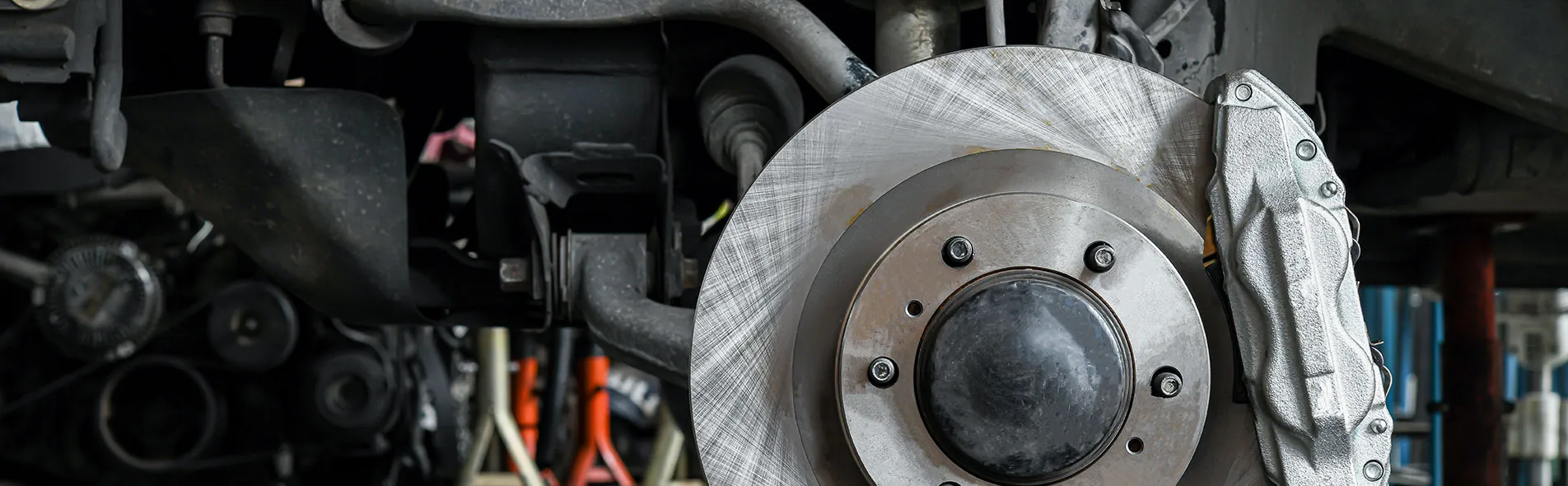
- Brake discs. A car that sits for a few days near the sea will have a film of rust on the discs. Normally that cleans off in the first few hundred yards. On a car that is not driven much, or on the rear axle of a car with light rear brakes, it can pit the disc surface permanently, and the caliper slides and handbrake mechanisms seize.
- Sills, wheel arches and subframes. The structural areas. Rust here is where an advisory becomes a failure, and once it has gone through the metal the repair is expensive.
- Exhaust systems. Mild-steel exhausts rot from the outside in.
- Suspension springs and mountings. Corrosion weakens coil springs, which is why broken springs are so common here.
- Electrical connectors. Corroded connectors and earth points cause intermittent electrical faults that can be hard to trace.
The ferry effect
A specific one for Island drivers: a car that has sat on a ferry deck with the handbrake on, in salt spray, will sometimes come off with the rear brakes binding. Usually it frees with a few firm stops. If you get a burning smell or the wheel is hot after a short drive, the mechanism has seized and needs freeing off.
What the MOT tester looks for
The tester checks the structure within 30cm of any mounting point for the suspension, steering, seat belts and brakes, and checks the brake pipes and fuel lines along their length. Surface rust is fine. Rust that has weakened the metal, or a pipe that is heavily pitted, is a failure. We photograph corrosion on your Vehicle Health Check so you can see what we are looking at.
How to slow it down
- Wash the underside of the car regularly, especially after winter and after any trip on salted roads. A pressure wash under the arches and along the sills does a lot.
- Have the underside treated with a wax or oil-based rust proofing. On a car you intend to keep, it is the best money you can spend.
- Drive the car. A car that sits is a car that rusts. Even a weekly run keeps the brakes clean and the seals working.
- Deal with stone chips and scratches before the rust gets in behind the paint.
- Have the brake pipes and structure inspected every year, not just at the MOT.
If you would like the underside of your car checked, book a Vehicle Health Check at our Newport or Lymington branch and ask us to look at the corrosion specifically.
Book online at bestgarages.co.uk or call your nearest branch: Newport on 01983 533360, Lymington on 01590 674776, or Fordingbridge on 01425 561504.